Il gioco si blocca... ho perso tutte e tre le vite per un freeze. Nessuno risponde. HO SCRITTO AL SUPPORTO DUE VOLTE. Silenzio totale... non è possibile.
Pharaoh Quest: Gold Rush App
2.00 (3 reviews)On this page
Reviewed by
Ludis.app Team
Published
May 20, 2026
Updated
May 20, 2026
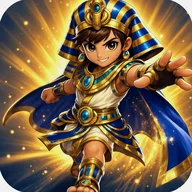
Pharaoh Quest: Gold Rush is a mobile arcade game set inside an ancient Egyptian desert temple, where quick reflexes and greed are your only tools for survival. You play as a cartoon-style pharaoh hero navigating a relentless rain of treasures and hazards falling from above. The game suits anyone who enjoys pick-up-and-play arcade challenges wrapped in vivid, golden-hued visuals. Three lives stand between you and a final score — make them count.
Temple in Motion
Inside the Temple
Pharaoh Quest: Gold Rush drops you into a falling-objects arcade loop with a clear Egyptian mythology twist. Your pharaoh slides left and right across the screen, and the entire game is built around one fundamental tension: grab everything valuable, avoid everything lethal, and hold on as long as you can.
What Falls and What It Costs You
- Gold Coins are the bread and butter — +10 points each, with a glittering spin animation on collection.
- Royal Gems step it up at +50 points, triggering a hypnotic glow pulse that briefly illuminates the temple around you.
- The Eye of Horus is the rarest and most rewarding object in the game — a +150 point jackpot that unleashes a blazing golden particle burst and a shimmering divine shine effect on screen.
- Desert Scorpions hunt you with a sinister side-to-side crawl and cost you one life on contact.
- Falling Rocks are the most immediately dangerous hazard — they plummet at 1.3× speed with relentless rotation and end you in a single blow.
Escalating Pressure
The game doesn't stay gentle. Fall speed scales from 180 px/s at the start up to 480 px/s over time, and treasures rain down up to 4× faster the longer you survive. You carry 3 lives total, tracked by red heart icons in the top-left HUD. The soundtrack — described as heart-pounding ancient Egyptian music — adds a layer of relentless momentum that matches the escalating chaos on screen.
Visuals and Interface
The art style is vibrant cartoon-style 3D rendering in a dominant golden yellow and bright blue palette. The temple backdrop features guardian statues, cascading waterfalls, turquoise pools, and palm trees — all visible during active play. Menus use dark bronze modal overlays with golden borders, and every button carries both a text label and an icon, making navigation reasonably clear. Pause options include Resume, Restart, Mute, and Exit Game. The Game Over screen displays your final score in large yellow numerals with a Play Again prompt.
The color contrast between white text and golden backgrounds is a genuine readability concern flagged in the accessibility documentation — it's a real rough edge in an otherwise clean interface.
Score-Chasing With Ancient Stakes
The entire design is built for short, intense sessions. The Eye of Horus symbol — the same iconic emblem displayed in the start screen's logo and the pause menu's score display — ties the aesthetic and the mechanics together into a coherent theme. Collecting it mid-run, surrounded by particle bursts and a divine shine effect, is the game's most visually rewarding moment. Whether that moment comes at score 80 or score 290, the loop invites one more attempt.
Gameplay Specifications
Game Genre
Falling objects arcade
Control Scheme
Drag left/right touch input
Lives Per Session
3
Fall Speed Range
180–480 px/s, scaling with survival time
Spawn Rate Scaling
Up to 4× faster over time
Collectible Types & Points
Gold Coin (+10 pts), Royal Gem (+50 pts), Eye of Horus (+150 pts)
Hazard Types
Desert Scorpion (side-to-side movement), Falling Rock (1.3× speed)
Audio
Ancient Egyptian soundtrack with in-game mute option
| Game Genre | Falling objects arcade |
| Control Scheme | Drag left/right touch input |
| Lives Per Session | 3 |
| Fall Speed Range | 180–480 px/s, scaling with survival time |
| Spawn Rate Scaling | Up to 4× faster over time |
| Collectible Types & Points | Gold Coin (+10 pts), Royal Gem (+50 pts), Eye of Horus (+150 pts) |
| Hazard Types | Desert Scorpion (side-to-side movement), Falling Rock (1.3× speed) |
| Audio | Ancient Egyptian soundtrack with in-game mute option |
How to Play
How do I control the Pharaoh character during gameplay?
You drag the Pharaoh hero left and right across the screen to collect falling treasures and dodge hazards. The controls are simple touch-based interactions with no complex gestures required.
What items can I collect and how many points does each one give?
Gold Coins award +10 points with a glittering spin animation, Royal Gems grant +50 points with a glow pulse effect, and the rare Eye of Horus is worth +150 points and triggers a blazing golden particle burst.
What dangers should I watch out for while playing?
The Desert Scorpion crawls side-to-side hunting your character and costs you one precious life on contact, while the Falling Rock plummets at 1.3× speed and will end you in a single hit.
How many lives do I get, and what happens when they are all gone?
You start each run with 3 lives, represented by red heart icons at the top of the screen. Losing all three triggers the Game Over screen, which displays your Final Score and offers a Play Again button to start a new run.
Does the game become more difficult the longer you survive?
Yes, the difficulty ramps up continuously — fall speed scales from 180 to 480 px/s, and treasures and hazards rain down up to 4× faster the longer you stay alive.
Reviews (3)
View allLog in to write a review
Log in with Telegram
Oyunu indirdim, ne beklediğimi tam bilmiyordum açıkçası. Firavun karakteri güzel çizilmiş... ama oynanış bir süre sonra tekrar gibi hissettiriyor. Sağa sola sürükle, sikke topla, taştan kaç. Hepsi bu. Hız artıyor, tamam. Ama ekran sarsıntısı bazen gereğinden fazla... baş ağrısı yapıyor. Üç canın bitişi de çok ani geliyor, akrep fark etmeden …
Pharaoh Quest: Gold Rush – ich hab das Spiel jetzt eine Weile ausprobiert und frage mich: Ist es das, was man sich von einem Arcade-Game erwartet, oder bleibt es hinter seinen Möglichkeiten zurück? Das Konzept ist simpel – Münzen einsammeln, Edelsteine greifen, dem Skorpion ausweichen, Felsbrocken vermeiden. Das Eye of …
4 replies
greta_tipps: ein nettes Zeitvertreib-Spiel für zwischendurch, das seinen Zweck erfüllt
Ich find das Spiel eigentlich ziemlich süß... der kleine Pharao-Charakter ist so niedlich animiert und das goldene Tempel-Setting macht einfach Spaß anzuschauen. Klar, nach einer Weile wird's ein bisschen eintönig, aber für ein kurzes Spiel zwischendurch auf dem Sofa ist es echt okay 😄
Marlene_k92: Welchen Mehrwert bringt das Herz-System hier genau?
Aber mal ehrlich – das Herz-System ist in diesem Genre eigentlich Standard. Die Frage ist eher, ob es dem Spielgefühl dient. Hier würde ich sagen: es schafft zumindest einen Grund, nicht gedankenlos drauflos zu spielen. Ob das ausreicht, um den Wiederspielwert zu rechtfertigen, ist eine andere Diskussion.
OnePlus 12, Android 14. Steuerung reagiert verzögert bei schnellen Wischgesten. Ab ca. 400 px/s Fallgeschwindigkeit nicht mehr präzise steuerbar. Liegt am Touch-Sampling, nicht am Gerät.
Dreimal Leben – ist das eigentlich ein Feature oder eine Einschränkung? Bei einem Arcade-Spiel ohne echte Progression fragt man sich schon, warum man nicht einfach weiterspielt, wenn man alle drei verloren hat. Welchen Mehrwert bringt das Herz-System hier genau? Ich sehe keinen, außer künstlichem Druck. Das Eye of Horus mit 150 Punkten klingt verlockend, aber wenn ein einziger Felsbrocken ein Leben kostet, ist die Punkteausbeute pro Runde letztlich sehr zufallsabhängig.
Ehrlich gesagt kann ich das mit der verzögerten Steuerung bestätigen – auf meinem älteren Gerät (Android 12) ist das noch deutlicher. Mal abgesehen davon finde ich die Grundidee des Spiels ja gar nicht schlecht, aber wenn die Eingabe nicht zuverlässig funktioniert, macht das den Kern des Spiels kaputt. Das ist bei einem Reaktionsspiel dieser Art halt das entscheidende Element.