Gold Ruch Leprechaun drops players into a fairy-tale village cast under threat by Grimmor, an evil wizard who has scattered magical clovers across the land. Your role is to assist the two main characters — a cheerful leprechaun and a charismatic wise wizard — by completing challenges, collecting lucky symbols, and gradually restoring peace to the village. The story is delivered through a dialog-driven tutorial system: an elderly wizard with a glowing staff speaks directly to you, calling you "young traveler" and guiding each step.
Characters and World
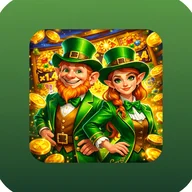
The leprechaun is the visual heart of the game — a cartoon figure with an orange-red beard, blue eyes, a green top hat, and a pipe with curling white smoke. He appears throughout screens, at one point extending a green-sleeved hand with magical energy swirling from his fingertip. The wizard counterpart wears a purple hooded robe, carries a staff topped with a glowing white orb, and greets players with a friendly expression on a warm, blurred backdrop of stone-and-wood village buildings lit by soft evening light. The backgrounds lean into emerald green, golden yellow, and rainbow spectrum colors — vivid and busy, with floating coins, four-leaf clovers, and sparkle effects layered throughout.
Gameplay Structure
- Tutorial levels with on-screen instructions introduce mechanics gradually
- Tasks involve collecting clovers and avoiding obstacles
- A NEXT button advances dialog, sized for comfortable touch interaction
- A skip option lets returning players bypass story sequences
- Short session design makes it suited for play in spare moments
A Visual World That Echoes Lucky Cloverland
The slot-style visual language running through Gold Ruch Leprechaun — horseshoes on purple backgrounds, golden Q and A card symbols, a black pot overflowing with coins, and BONUS roundels against sky-blue clouds — will feel immediately familiar to fans of Irish-themed games like Lucky Cloverland. Both share the same emerald-and-gold palette, the same rainbow arcs framing the action, and the same cast of Irish folk symbols treated as collectible rewards. If the spinning-reel aesthetic is what drew you in, the adventure format here gives those same visuals a narrative context to move through.
One Genuine Limitation
The game relies heavily on color to differentiate symbols — red backgrounds for beer mugs, green for card letters, purple for horseshoes — without shape or pattern alternatives. Players with red-green color blindness may find some elements harder to distinguish, and small navigation buttons alongside the main interface could present a challenge for users who need larger touch targets.