Fishing Fortune frames classic memory card gameplay inside a detailed ice-fishing world. Players flip cards laid out on a 3×4 grid, trying to match pairs of fish hidden beneath icy card backs. The core rule is strict: only two cards may be flipped per turn, so observation and recall matter from the very first move.
Fish, Points, and the Hunt for Rare Catches
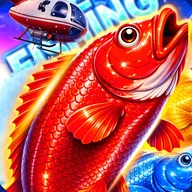
Not all fish are equal in Fishing Fortune. Gold fish carry more points than common catches, while red fish represent the most valuable trophy — matching a red pair earns maximum bonuses. This tiered scoring system adds a layer of priority to what could otherwise be a straightforward matching exercise. After each round, a results popup displays your total points, number of moves, and elapsed time, giving you clear targets to beat on a retry.
- 12 numbered fishing spots selectable from a grid-based level menu
- Cards tracked with a live PAIRS counter, move count, and timer during play
- End-screen options to proceed to the next spot, try again, or return home
- Pause menu with Resume and Home buttons available mid-round
Visuals and Atmosphere
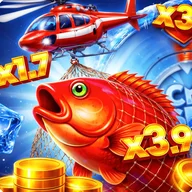
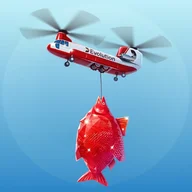
The game runs on deep blue backgrounds populated with white snowflakes, ice crystal formations, and constellation-patterned night skies. Snow-covered evergreen trees frame the level selection screen, and star reflections ripple across the water below. Multiplier values — rendered as bold yellow 3D text with red outlines — appear prominently across promotional screens alongside a red-and-white helicopter and stacks of golden coins. The UI follows a consistent colour logic: green buttons signal positive progress, red marks exits or high-value catches, and blue covers neutral navigation throughout.
Where Multipliers Meet the Ice
Fans of casino-style ice fishing games — the kind that flash x3.9 or x5.8 in golden yellow over a caught red fish — will find the visual language of Fishing Fortune immediately familiar. The same deep blue winter palette, the same gleaming coins, the same sense that a single well-timed flip could change your score entirely. Here, though, the outcome rests entirely on memory rather than chance: the multiplier-style thrill is real, but it's earned card by card.
One Honest Limitation
The game relies heavily on colour coding to distinguish fish types and convey UI meaning. Players with colour vision differences may find it harder to quickly identify red versus blue fish on the green-backed cards, as the distinction carries direct scoring weight. This is a functional accessibility gap worth noting for a broader audience.
Fishing Fortune works best as a short-session game — the kind you pick up for a few minutes and find yourself replaying simply to trim two moves off your last score.